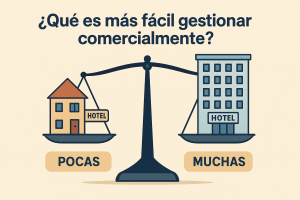


This topic has been a source of controversy among many sales professionals, especially when golf course marketing strategies have been designed by experts in hotel commercial development.
The Conflict Between Both Strategies
The controversy arises when hotel industry professionals try to apply commercial strategies typical of the hospitality sector to golf courses. Many will wonder how I can write about these differences when in previous publications I have highlighted the synergies between both businesses (Hotels and Golf Courses: A Symbiotic Relationship).
The key lies in differentiating between the existence of synergies and the specific know-how required by each sector to develop its commercial and marketing plans.
For months I have wanted to clarify these differences, and to avoid going into further detail about the controversy, let’s list them clearly:
Key Differences Between Golf and Hotel Marketing
Golf Course Marketing
Focus on local and international marketing.
Customer loyalty serves as a determining factor.
Requires commercial professionals with experience in the golf industry.
Necessitates presence at specialized national and international fairs.
Requires constant events and activities to reinforce customer engagement.
Targets unique, dynamic, and segmented market niches.
Relies on intermediation through agencies and tour operators specializing in golf.
Appeal is heavily based on golf packages and programs.
Client’s socioeconomic profile: Medium-high.
A demanding target audience, with very specific preferences regarding destinations and experiences.
Hotel Marketing
Broad national and international marketing strategy.
Although they need customer loyalty, they do not depend on the local market.
Marketing is open to all professionals in the tourism industry.
Involves participation in multiple national and international fairs across various segments.
They do not need constant events, since the customer’s basic need is simply to spend the night in their facilities.
Diversity in market niches: Business, leisure, incentives, meetings, etc.
They do not require specialized tour operators, as the accommodation offer is open to all types of audiences.
Their appeal lies primarily in location, quality, and service.
Varied socioeconomic profile, ranging from high-purchasing-power clients to lower economic segments.
Broader target audience, offering greater possibilities for conversion.
Final Reflection
Although these differences are not enough to explain in depth the specialization required by each sector, they can help you understand the training and experience necessary to properly manage each type of business.
Do you think hotel marketing strategies can be applied to golf without modifications? What has been your experience in these sectors?